The objective of this work is to quantify the reconstruction error in sparse inverse problems with measures and stochastic noise, motivated by optimal sensor placement. To be useful in this context, the error quantities must be explicit in the sensor configuration and robust with respect to the source, yet relatively easy to compute in practice, compared to a direct evaluation of the error by a large number of samples. In particular, we consider the identification of a measure consisting of an unknown linear combination of point sources from a finite number of measurements contaminated by Gaussian noise. The statistical framework for recovery relies on two main ingredients: first, a convex but non-smooth variational Tikhonov point estimator over the space of Radon measures and, second, a suitable mean-squared error based on its Hellinger-Kantorovich distance to the ground truth. To quantify the error, we employ a non-degenerate source condition as well as careful linearization arguments to derive a computable upper bound. This leads to asymptotically sharp error estimates in expectation that are explicit in the sensor configuration. Thus they can be used to estimate the expected reconstruction error for a given sensor configuration and guide the placement of sensors in sparse inverse problems.


翻译:本文旨在量化稀疏逆问题中带随机噪声的测度重建误差,并以此驱动最优传感器配置研究。为实现该目标,误差量需显式依赖于传感器配置且对源项具有鲁棒性,同时相比通过大量样本直接评估误差,更需具备实际计算可行性。具体而言,我们研究从受高斯噪声污染的有限测量中识别由点源未知线性组合构成的测度问题。恢复的统计框架基于两个核心要素:其一,在拉东测度空间上构建凸但非光滑的变分吉洪诺夫点估计器;其二,基于估计量与真值之间的赫林格-坎托罗维奇距离建立合适的均方误差准则。为量化误差,我们引入非退化源条件并通过精细线性化推导出可计算的上界,最终获得传感器配置显式表达的渐近紧误差期望估计。该结果既可评估给定传感器配置下的预期重建误差,亦可指导稀疏逆问题中的传感器优化布局。


0
下载
关闭预览

相关内容

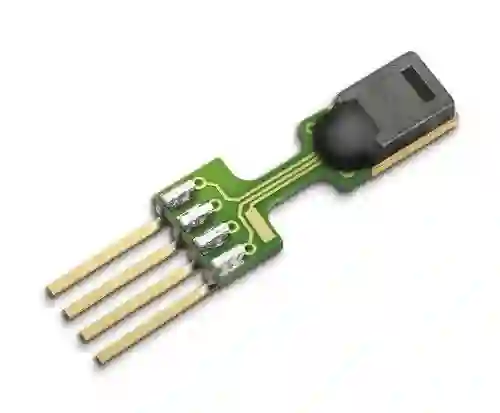
传感器(英文名称:transducer/sensor)是一种检测装置,能感受到被测量的信息,并能将感受到的信息,按一定规律变换成为电信号或其他所需形式的信息输出,以满足信息的传输、处理、存储、显示、记录和控制等要求。
Linux导论,Introduction to Linux,96页ppt
专知会员服务
82+阅读 · 2020年7月26日
【ACL2020】多模态信息抽取,365页ppt
专知会员服务
151+阅读 · 2020年7月6日
专知会员服务
55+阅读 · 2020年3月16日
FlowQA: Grasping Flow in History for Conversational Machine Comprehension
专知会员服务
34+阅读 · 2019年10月18日
强化学习最新教程,17页pdf
专知会员服务
182+阅读 · 2019年10月11日
【SIGGRAPH2019】TensorFlow 2.0深度学习计算机图形学应用
专知会员服务
41+阅读 · 2019年10月9日
RL解决'BipedalWalkerHardcore-v2' (SOTA)
CreateAMind
31+阅读 · 2019年7月17日
meta learning 17年:MAML SNAIL
CreateAMind
11+阅读 · 2019年1月2日
利用动态深度学习预测金融时间序列基于Python
量化投资与机器学习
18+阅读 · 2018年10月30日
disentangled-representation-papers
CreateAMind
26+阅读 · 2018年9月12日
STRCF for Visual Object Tracking
统计学习与视觉计算组
15+阅读 · 2018年5月29日
Focal Loss for Dense Object Detection
统计学习与视觉计算组
12+阅读 · 2018年3月15日
可解释的CNN
CreateAMind
18+阅读 · 2017年10月5日
Layer Normalization原理及其TensorFlow实现
深度学习每日摘要
32+阅读 · 2017年6月17日
国家自然科学基金
1+阅读 · 2017年12月31日
国家自然科学基金
2+阅读 · 2017年12月31日
国家自然科学基金
1+阅读 · 2016年12月31日
国家自然科学基金
2+阅读 · 2015年12月31日
国家自然科学基金
2+阅读 · 2015年12月31日
国家自然科学基金
0+阅读 · 2015年12月31日
国家自然科学基金
0+阅读 · 2015年12月31日
国家自然科学基金
0+阅读 · 2014年12月31日
国家自然科学基金
0+阅读 · 2014年12月31日
国家自然科学基金
0+阅读 · 2014年12月31日
Arxiv
0+阅读 · 2024年5月23日
A survey on deep hashing for image retrieval
Arxiv
15+阅读 · 2020年6月10日
VIP会员
最新内容
学习数据的几何:形状空间分析数学综述
专知会员服务
7+阅读 · 6月17日
定向能反无人机系统最新发展动态
专知会员服务
8+阅读 · 6月17日
从燃煤战舰到算法战争:水面指挥的永恒要求
专知会员服务
6+阅读 · 6月17日
相关资讯
RL解决'BipedalWalkerHardcore-v2' (SOTA)
CreateAMind
31+阅读 · 2019年7月17日
meta learning 17年:MAML SNAIL
CreateAMind
11+阅读 · 2019年1月2日
利用动态深度学习预测金融时间序列基于Python
量化投资与机器学习
18+阅读 · 2018年10月30日
disentangled-representation-papers
CreateAMind
26+阅读 · 2018年9月12日
STRCF for Visual Object Tracking
统计学习与视觉计算组
15+阅读 · 2018年5月29日
Focal Loss for Dense Object Detection
统计学习与视觉计算组
12+阅读 · 2018年3月15日
可解释的CNN
CreateAMind
18+阅读 · 2017年10月5日
Layer Normalization原理及其TensorFlow实现
深度学习每日摘要
32+阅读 · 2017年6月17日
相关基金
国家自然科学基金
1+阅读 · 2017年12月31日
国家自然科学基金
2+阅读 · 2017年12月31日
国家自然科学基金
1+阅读 · 2016年12月31日
国家自然科学基金
2+阅读 · 2015年12月31日
国家自然科学基金
2+阅读 · 2015年12月31日
国家自然科学基金
0+阅读 · 2015年12月31日
国家自然科学基金
0+阅读 · 2015年12月31日
国家自然科学基金
0+阅读 · 2014年12月31日
国家自然科学基金
0+阅读 · 2014年12月31日
国家自然科学基金
0+阅读 · 2014年12月31日
Top
微信扫码咨询专知VIP会员