

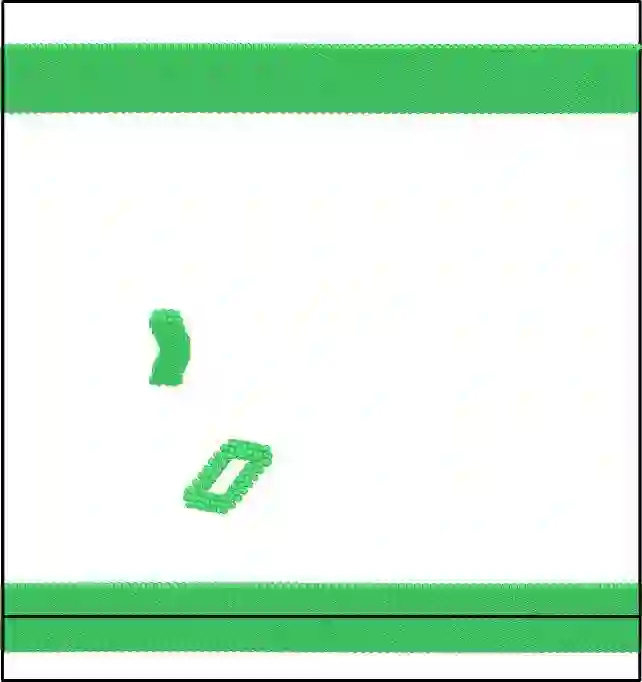
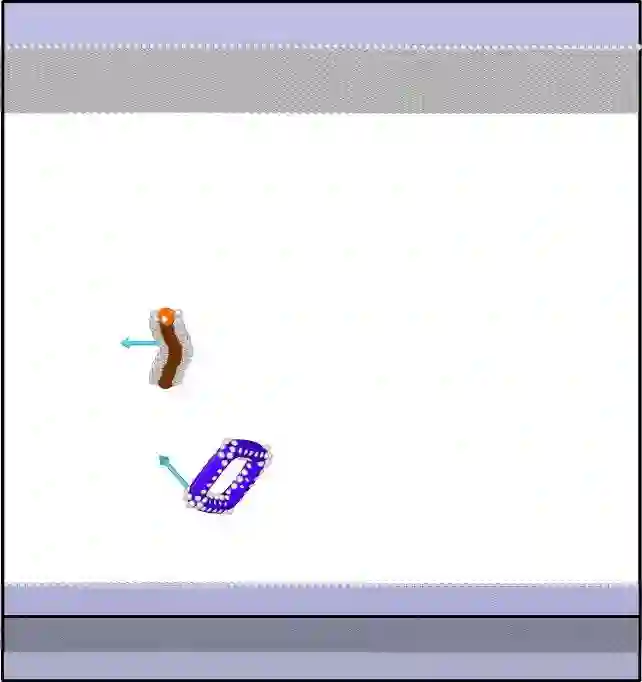
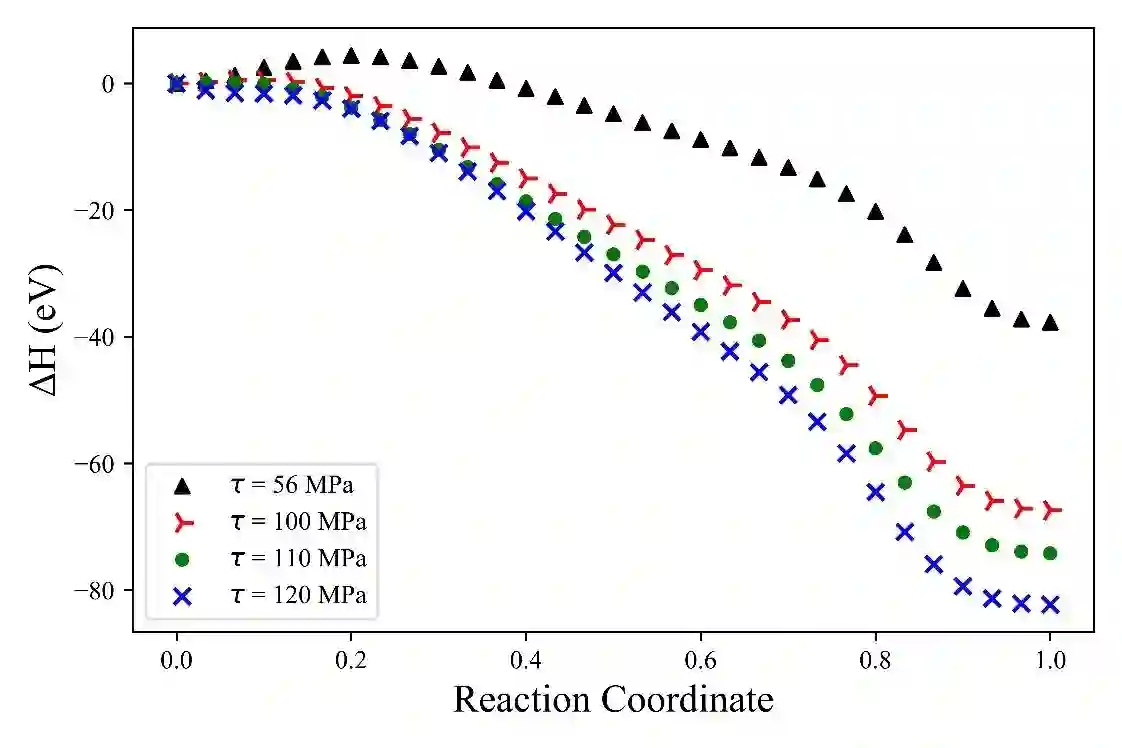
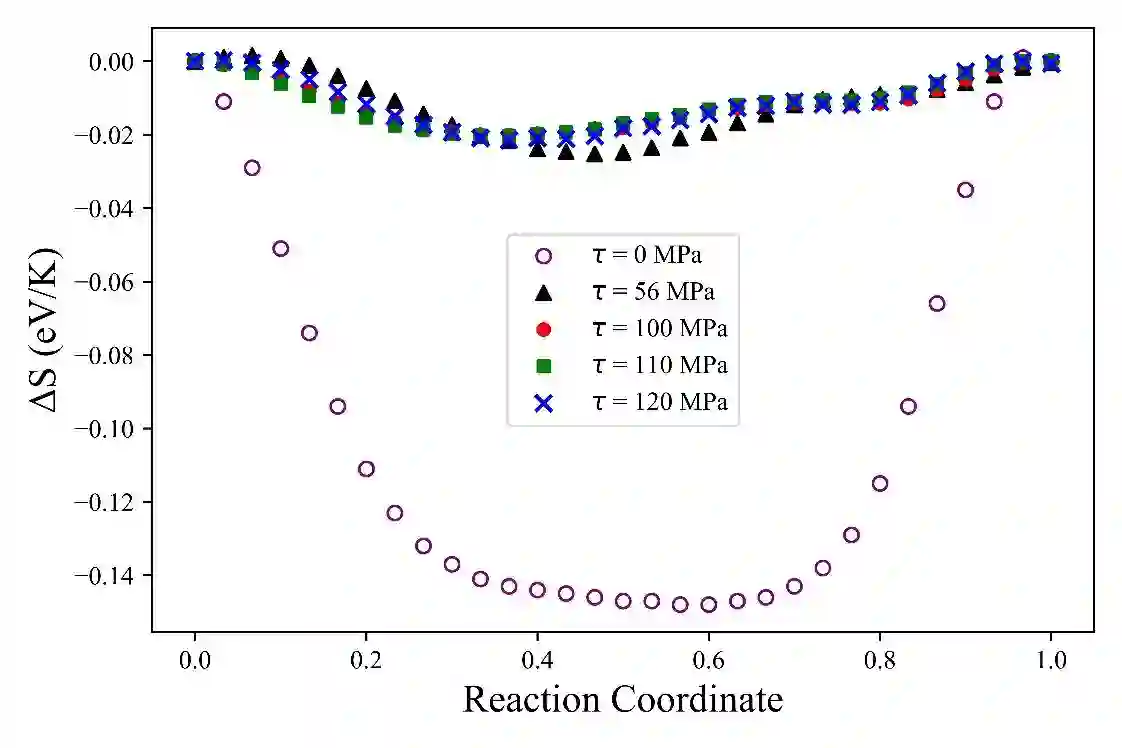
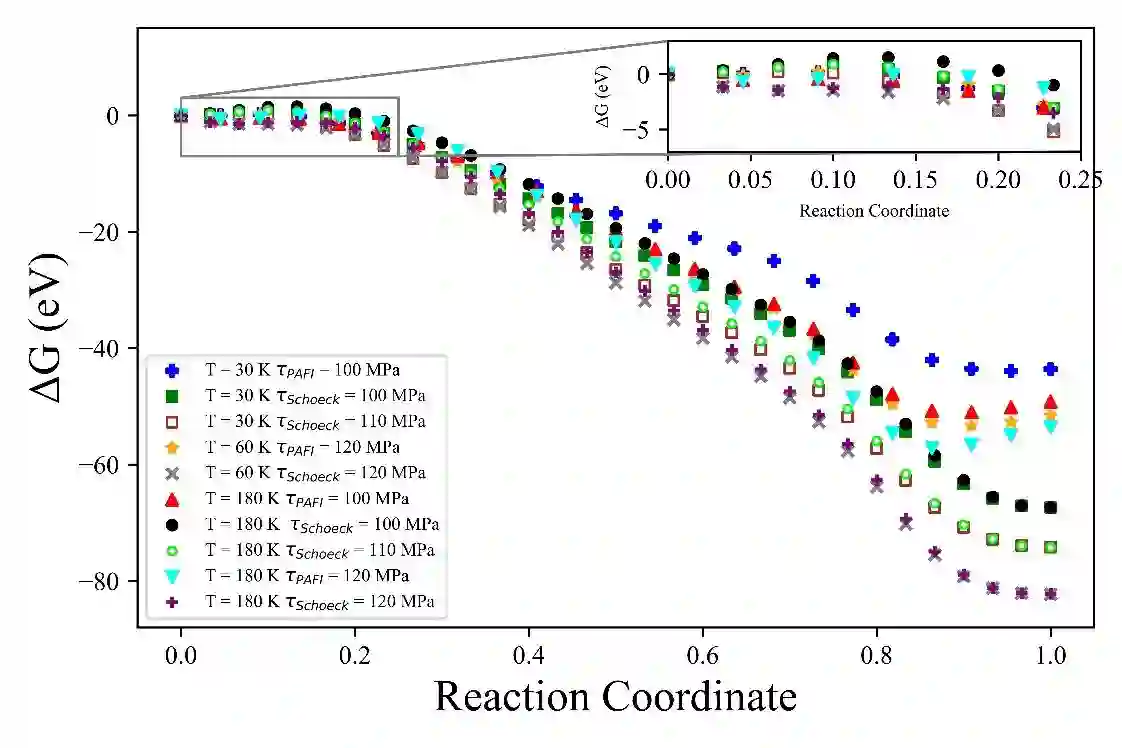
Dislocations are the primary carriers of plasticity in metallic material. Understanding the basic mechanisms for dislocation movement is paramount to predicting the material mechanical response. Relying on atomistic simulations, we observe a transition from non-Arrhenius to Arrhenius behavior in the rate for an edge dislocation to overcome the elastic interaction with a prismatic loop in tungsten. Beyond the critical resolved shear stress, the process shows a non-Arrhenius behavior at low temperatures. However, as the temperature increases, the activation entropy starts to dominate, leading to a traditional Arrhenius behavior. We have computed the activation entropy analytically along the minimum energy path following Schoeck's methods [1], which capture the cross-over between anti-Arrhenius and Arrhenius domains. Also, the Projected Average Force Integrator (PAFI) [2], another simulation method to compute free energies along an initial transition path, exhibits considerable concurrence with Schoeck's formalism. We conclude that entropic effects need to be considered to understand processes involving dislocations bypassing elastic barriers close to the critical resolved shear stress. More work needs to be performed to fully understand the discrepancies between Schoeck's and PAFI results compared to molecular dynamics.
翻译:位错是金属材料塑性的主要载体。理解位错运动的基本机制对于预测材料的力学响应至关重要。基于原子模拟,我们观察到钨中刃型位错克服与棱柱位错环弹性相互作用的速率从非阿伦尼乌斯行为向阿伦尼乌斯行为转变。在临界分切应力之上,该过程在低温下呈现非阿伦尼乌斯行为。然而,随着温度升高,激活熵开始占据主导地位,导致传统的阿伦尼乌斯行为。我们按照Schoeck的方法[1]沿最小能量路径解析计算了激活熵,该方法捕捉到了反阿伦尼乌斯域与阿伦尼乌斯域之间的交叉。此外,投影平均力积分器(PAFI)[2]作为另一种沿初始过渡路径计算自由能的模拟方法,与Schoeck的形式主义表现出显著一致性。我们得出结论:在理解位错绕过接近临界分切应力的弹性势垒过程中,必须考虑熵效应。仍需开展更多工作以充分理解Schoeck方法与PAFI结果与分子动力学结果之间的差异。




相关内容




 微信扫码咨询专知VIP会员