

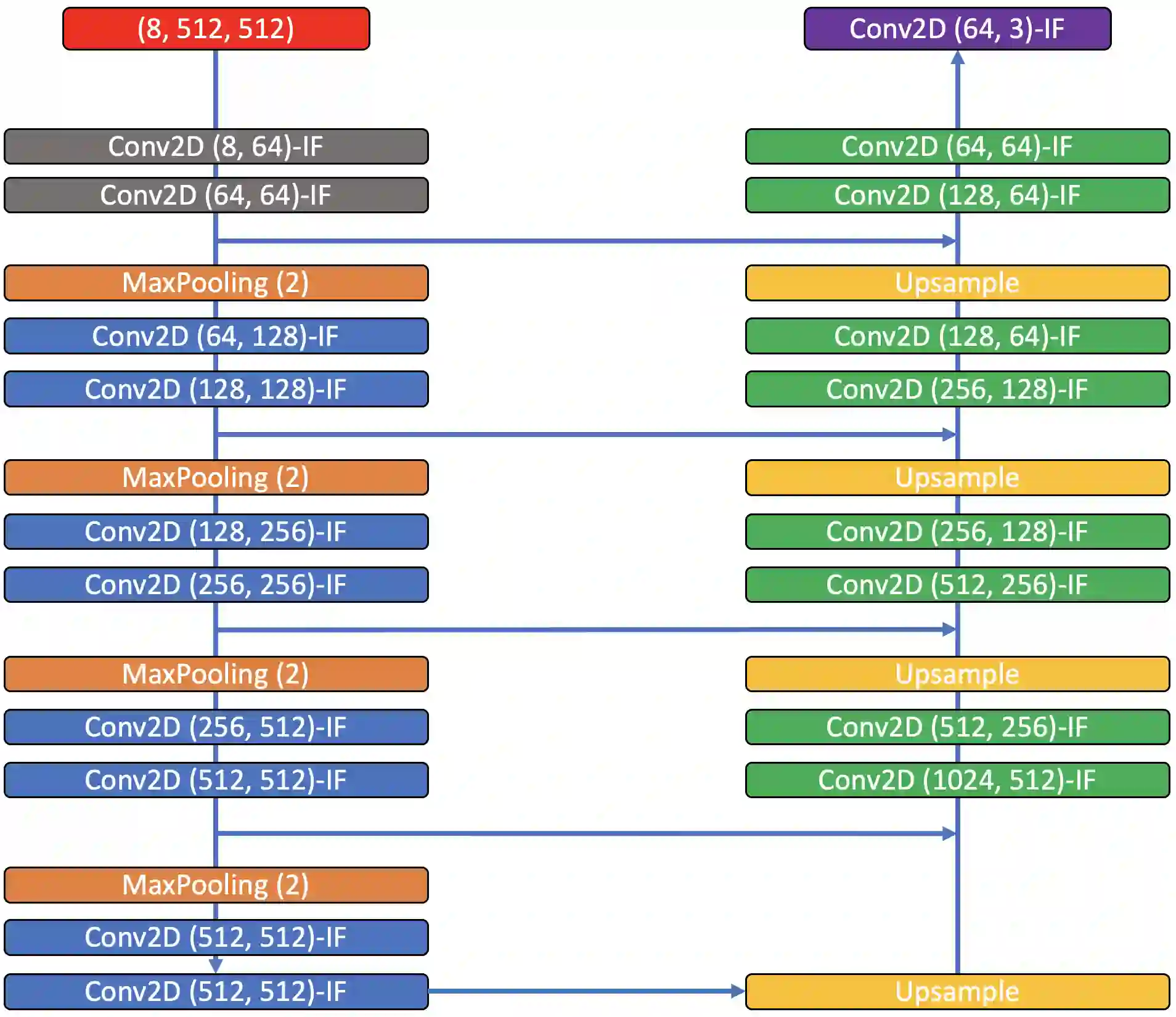
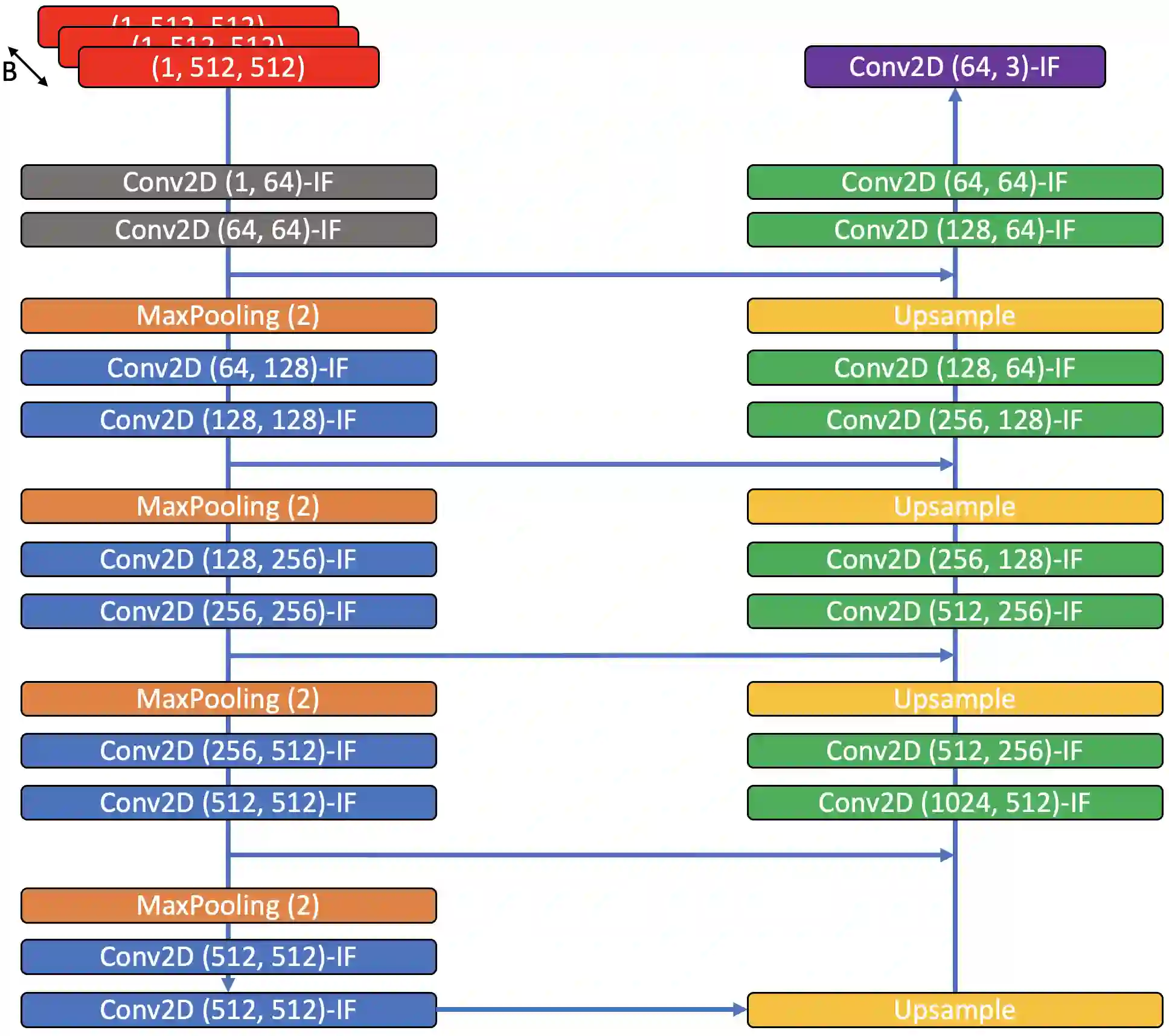
Recent advances in event-based shape determination from polarization offer a transformative approach that tackles the trade-off between speed and accuracy in capturing surface geometries. In this paper, we investigate event-based shape from polarization using Spiking Neural Networks (SNNs), introducing the Single-Timestep and Multi-Timestep Spiking UNets for effective and efficient surface normal estimation. Specificially, the Single-Timestep model processes event-based shape as a non-temporal task, updating the membrane potential of each spiking neuron only once, thereby reducing computational and energy demands. In contrast, the Multi-Timestep model exploits temporal dynamics for enhanced data extraction. Extensive evaluations on synthetic and real-world datasets demonstrate that our models match the performance of state-of-the-art Artifical Neural Networks (ANNs) in estimating surface normals, with the added advantage of superior energy efficiency. Our work not only contributes to the advancement of SNNs in event-based sensing but also sets the stage for future explorations in optimizing SNN architectures, integrating multi-modal data, and scaling for applications on neuromorphic hardware.
翻译:近期在基于偏振的事件驱动形状测定领域取得了突破性进展,为平衡表面几何捕获的速度与精度提供了创新解决方案。本文研究采用脉冲神经网络(SNNs)实现基于偏振的事件驱动形状重建,分别提出单时间步长与多时间步长脉冲UNet架构,实现高效精确的表面法向估计。具体而言,单时间步长模型将事件驱动形状视为非时间序列任务,每个脉冲神经元的膜电位仅更新一次,从而降低计算与能耗需求;而多时间步长模型则利用时间动态特性增强数据提取能力。在合成与真实数据集上的全面评估表明,所提模型在表面法向估计精度上可媲美最先进的人工神经网络(ANNs),且具有显著能效优势。本工作不仅推动了SNNs在事件驱动感知领域的发展,更为优化SNN架构、融合多模态数据以及拓展神经形态硬件应用奠定了研究基础。






相关内容





 微信扫码咨询专知VIP会员