

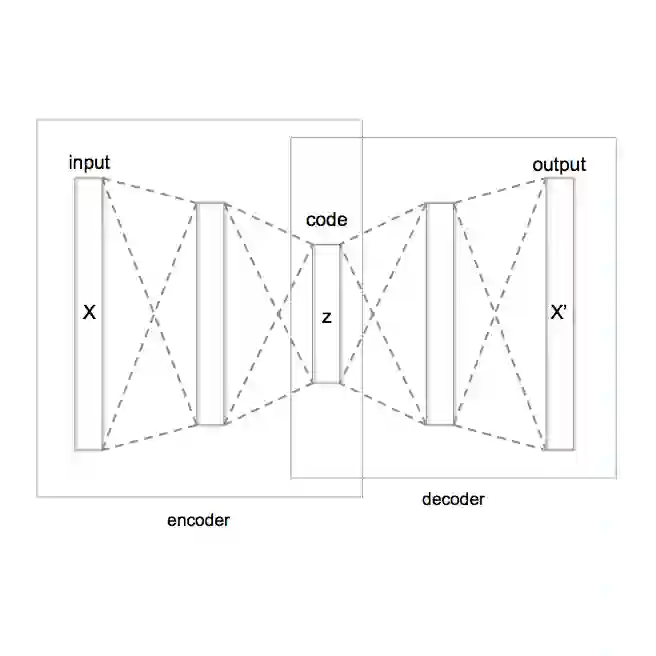
Quantitative imaging methods, such as magnetic resonance fingerprinting (MRF), aim to extract interpretable pathology biomarkers by estimating biophysical tissue parameters from signal evolutions. However, the pattern-matching algorithms or neural networks used in such inverse problems often lack principled uncertainty quantification, which limits the trustworthiness and transparency, required for clinical acceptance. Here, we describe a physics-structured variational autoencoder (PS-VAE) designed for rapid extraction of voxelwise multi-parameter posterior distributions. Our approach integrates a differentiable spin physics simulator with self-supervised learning, and provides a full covariance that captures the inter-parameter correlations of the latent biophysical space. The method was validated in a multi-proton pool chemical exchange saturation transfer (CEST) and semisolid magnetization transfer (MT) molecular MRF study, across in-vitro phantoms, tumor-bearing mice, healthy human volunteers, and a subject with glioblastoma. The resulting multi-parametric posteriors are in good agreement with those calculated using a brute-force Bayesian analysis, while providing an orders-of-magnitude acceleration in whole brain quantification. In addition, we demonstrate how monitoring the multi-parameter posterior dynamics across progressively acquired signals provides practical insights for protocol optimization and may facilitate real-time adaptive acquisition.
翻译:定量成像方法,例如磁共振指纹成像(MRF),旨在通过从信号演化中估计生物物理组织参数来提取可解释的病理学生物标志物。然而,用于此类逆问题的模式匹配算法或神经网络通常缺乏有理论依据的不确定性量化,这限制了临床接受所需的可信度与透明度。本文描述了一种为快速提取体素级多参数后验分布而设计的物理结构变分自编码器(PS-VAE)。我们的方法将可微分自旋物理模拟器与自监督学习相结合,并提供了捕获潜在生物物理空间参数间相关性的完整协方差矩阵。该方法在多质子池化学交换饱和转移(CEST)和半固体磁化转移(MT)分子MRF研究中,通过体外模型、荷瘤小鼠、健康人类志愿者以及一名胶质母细胞瘤患者进行了验证。所得的多参数后验分布与通过暴力贝叶斯分析计算的结果高度一致,同时在全脑量化方面实现了数量级的加速。此外,我们展示了如何通过监测渐进采集信号过程中的多参数后验动态,为协议优化提供实用见解,并可能促进实时自适应采集。




相关内容

 微信扫码咨询专知VIP会员